
straighten
Built to each cabinet
Every opening is measured on its own, because face-frame widths vary along a run even in a kitchen that looks uniform.
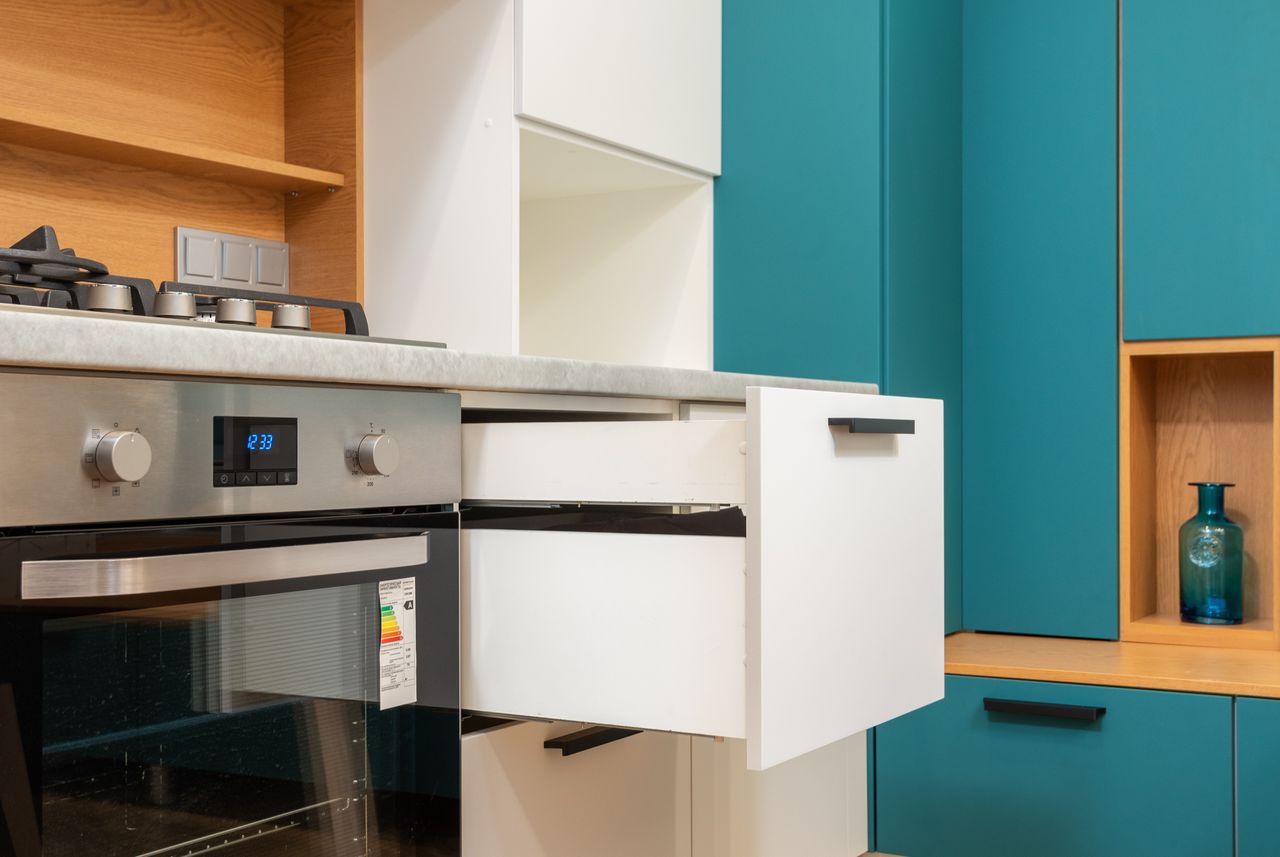
Working with what you have
Pull-out shelves in Louisville turn the back of a deep base cabinet into space you actually use, without changing anything you can see.
Pull-out shelves in Louisville are sliding trays fitted inside the base cabinets you already have. Each one is a shelf on full-extension runners, mounted to the cabinet sides so the whole tray comes out of the opening.
The cabinet keeps its doors and its face. From the outside nothing changes at all, which is the reason this is the easiest thing on the site to say yes to.
Most kitchens take them in the deep base units either side of the range, and under the sink where the trap allows a U-shaped tray.
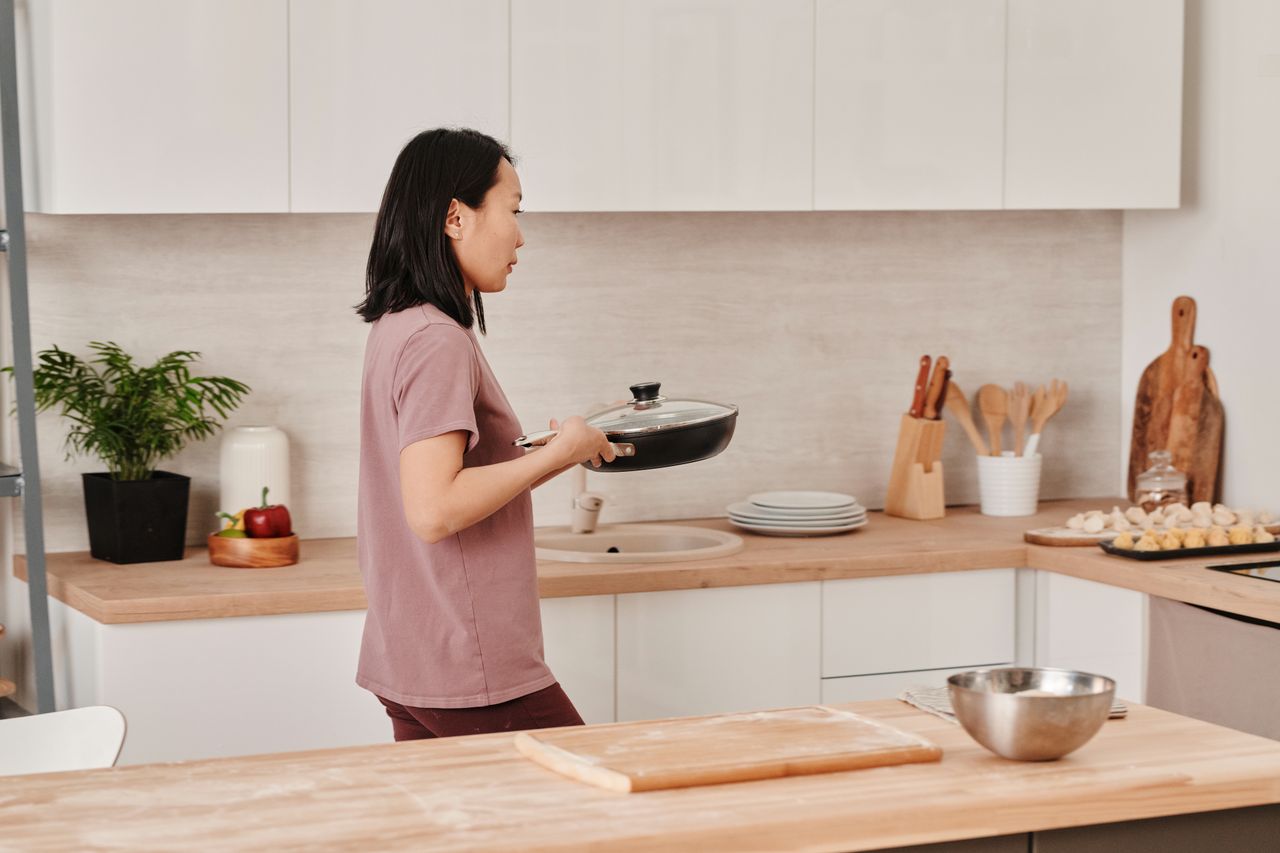
Every opening is measured on its own, because face-frame widths vary along a run even in a kitchen that looks uniform.
Slides are chosen for what the shelf will carry, since a tray of pans on light runners drops within a year.
Mounting cleats go to the cabinet sides, so nothing structural is cut and the work can be undone.
Each stage is signed off before the next one starts.
We measure the room itself rather than working from the plan, because walls are rarely square and the plan is rarely what got built. Every opening gets checked.
You get a layout and a written estimate broken down by stage, so you can see what the doors cost against the boxes against the install. Free, nothing to sign.
Cabinetry is built to the measurements we took, in the wood, door style and finish you picked. Lead time depends on the scope and we tell you before you commit.
Scribed to the walls, levelled, and fixed properly. Hardware adjusted so every door and drawer sits straight before we leave.

The back ten inches of a base cabinet is where things go to be forgotten.
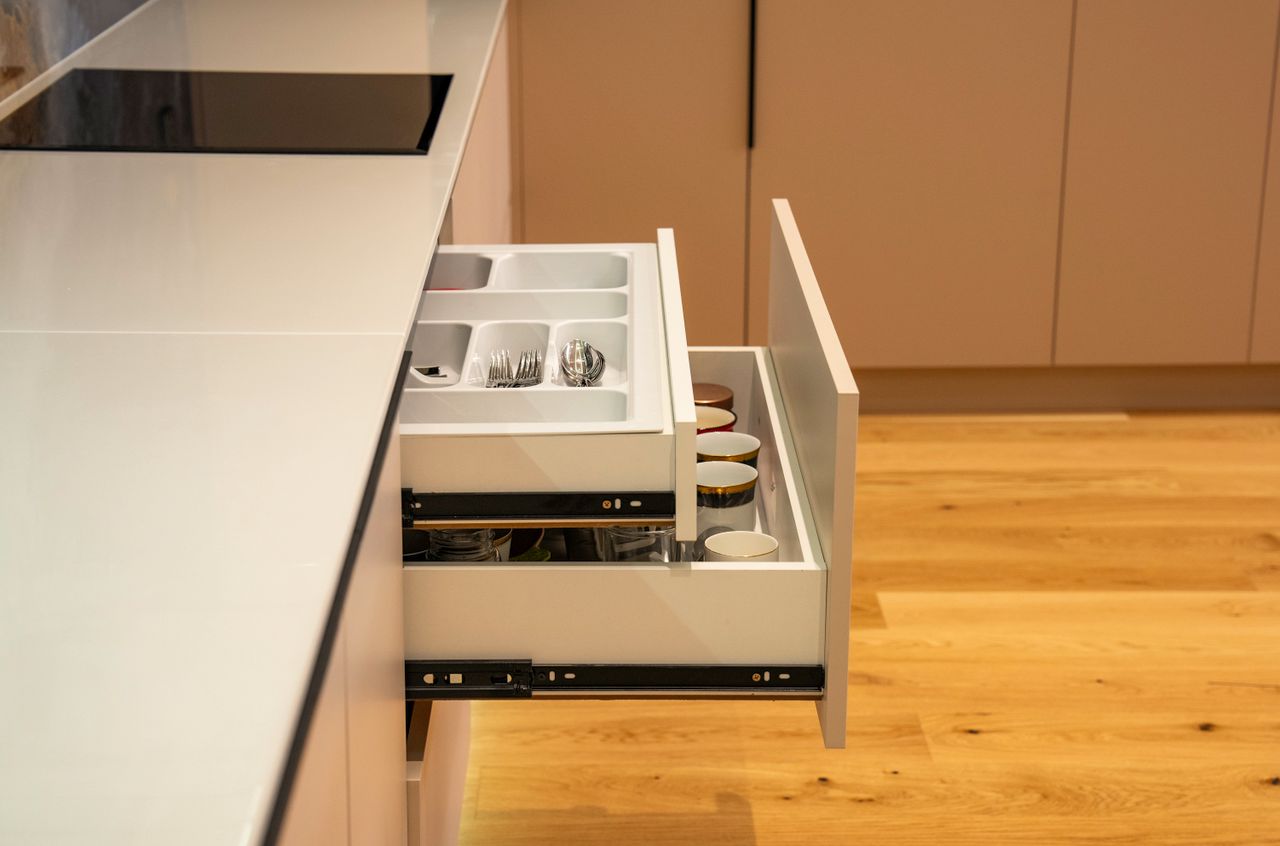
Anyone keeping their kitchen for now. If replacing it is years away or off the table, this is the change that makes the most difference per dollar spent.
It matters more as people age. Reaching into the back of a low cabinet means getting down on the floor, and pull-outs remove that entirely.
We measure each opening separately, since face-frame widths drift along a run even when the doors look identical. Hinge hardware and any center stile also decide how wide a tray can be.
Then trays are made to those widths and fitted on runners rated for the load. Nothing structural is cut, and the cleats can come out later without leaving damage.
Most kitchens are done in a single visit, and the cabinets stay usable throughout.
This is the lowest-ticket work here. You are paying per tray rather than for a project, so a few cabinets is a small job and a whole kitchen is still far below refinishing, which nationally runs $2,000 to $4,500.
Runner quality is the variable worth caring about. Full-extension soft-close hardware costs more than basic slides, and on a tray carrying pans it is the difference between something that lasts and something that sags.
A blind corner cabinet cannot take a straight tray, because most of its volume sits off to one side. Those need corner cabinet organizers instead.
Existing drawers that stick or bang are a separate fix, handled by soft-close drawers. If the cabinets themselves are damaged, cabinet repair in Louisville comes first, and where the fronts are the real problem there is cabinet refacing in Louisville and cabinet refinishing in Louisville. We work across the metro including cabinets in Prospect and cabinets in Anchorage.
If you want sliding shelves near you, we cover the Louisville metro and most kitchens are done inside a single visit.
Get a free written estimate and we will measure your Louisville base cabinets before quoting.
No. The mounting cleats go to the cabinet sides, nothing structural is cut, and the whole thing can be removed later without leaving damage.
Most base cabinets can. Blind corners cannot take a straight tray because their volume sits off to one side, and those need corner hardware instead.
No. The doors and the cabinet fronts stay exactly as they are, which is why nothing about the kitchen looks different afterwards.
Usually a single visit. Each opening is measured separately first, because face-frame widths drift along a run even when the doors look identical.
We stay inside about 20 miles of Louisville, close enough to measure, template and install without the schedule slipping. These are the areas we cover most often.
Tell us the room and what you want out of it. You get a written estimate broken down by stage, free, with nothing to sign.